Francesinha
Atomic Drive-In
Francesinha
Also known as Little Frenchie
On the record since 1953. Uncontested: Porto, Portugal takes the credit.
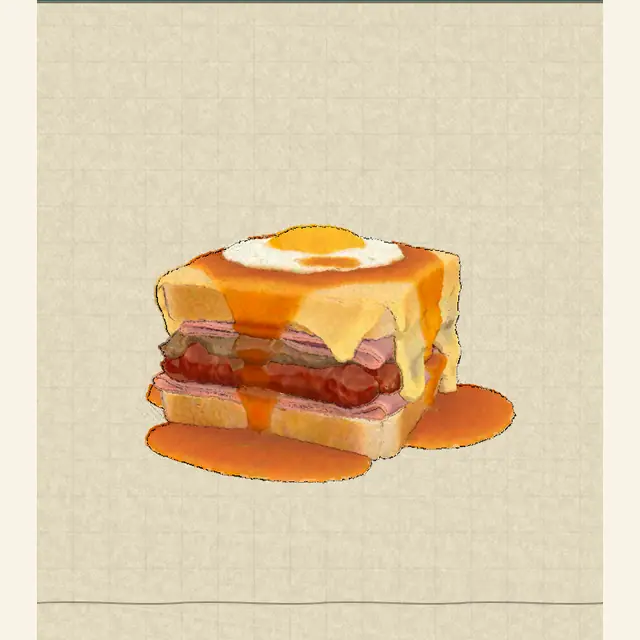
Medium confidenceAnatomy of the Francesinha
Origin story
Porto, Portugal · 41.15°N, 8.61°W
Credited to Daniel da Silva, a Portuguese cook who had spent time in France and Belgium and, on returning to Porto in the early 1950s, reworked the croque monsieur with Portuguese meats and a sauce built to compensate…
Credited to Daniel da Silva, a Portuguese cook who had spent time in France and Belgium and, on returning to Porto in the early 1950s, reworked the croque monsieur with Portuguese meats and a sauce built to compensate for a milder national palate. He served it at A Regaleira on Rua do Bonjardim in 1953. The first version was much plainer than the sandwich now sold under the name (bread and baked beef), and the layered construction of cured ham, steak, linguiça, melted cheese and beer-and-tomato sauce that defines it today accreted over the following decades. Sources are consistent on the who, where and roughly when; the word most of them hedge on is the exact inspiration, usually qualified as "allegedly" the croque monsieur rather than stated outright.
1953
Daniel da Silva serves an early francesinha, then a simpler bread-and-baked-beef dish, at A Regaleira on Rua do Bonjardim, Porto [2]
Our reconstruction
Notes on this reconstruction
We are reconstructing the sandwich as it is eaten today, not Silva's plainer 1953 original, which is why this sits at medium rather than high: the modern layered version is extremely well documented, but it is a later standardisation rather than what he actually served. The sauce is the entire project: a beer-and-tomato reduction with enough chilli and spice to read as assertive, ladled on near-boiling so it partially melts the cheese blanket on contact. Skip the fried egg and chips if you want the plainer, more traditional plate; we include the egg because it is the version most people now expect when they order one.
- Yield
- 2 sandwiches
Method
Make the sauce first: melt the butter, stir in the flour, and cook briefly before adding the beer and tinned tomatoes. Simmer with the bay leaf until it reduces to a pourable, well-seasoned sauce, then stir in the piri-piri sauce to taste.
Pan-fry the steaks, linguiça and ham lightly: the ham mainly needs warming through, the steak and sausage need real colour.
Layer the meats between two slices of bread per sandwich, stacking rather than spreading, so the finished sandwich has real height.
Drape the cheese slices over the top and sides of each sandwich, covering it completely: this is what the hot sauce will cling to and partially melt.
Ladle the hot sauce generously over the top, letting it run down the sides and pool at the base of the plate.
If using, fry the eggs and set one on top of each sandwich, and serve immediately with chips alongside, before the cheese sets.
Sources
- Francesinha: Wikipedia (retrieved 2026-09-24) Attribution to Daniel David de Silva; early-1950s date; reinterpretation of croque monsieur with Portuguese ingredients; composition of the modern sandwich
- The Story Behind Porto's Francesinha: Portugal.com (retrieved 2026-09-24) 1953 date; A Regaleira, Rua do Bonjardim; original plainer bread-and-baked-beef version; croque monsieur inspiration qualified as "allegedly"