Gilgeori toast
Time Immemorial
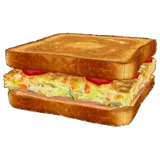
Gilgeori toast (길거리 토스트)
Also known as Korean street toast, street toast, egg toast
2 places claim to have invented this one. The case file is below.
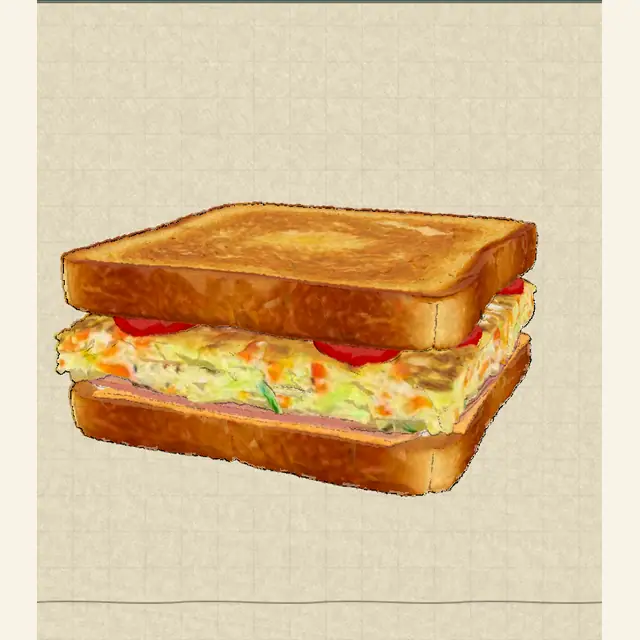
Medium confidenceAnatomy of the Gilgeori toast
Origin story
Seoul, South Korea · 37.57°N, 126.98°E
Nobody invented gilgeori toast in a way that left a record.
Nobody invented gilgeori toast in a way that left a record. It began as a home snack, white sliced bread fried in margarine around an egg and whatever vegetables were to hand, at a time when shop bread was still a small luxury, and moved onto the street as carts and food trucks started selling it to commuters and students for breakfast. A Seoul-born chef remembers buying it from truck vendors at the bus stop and eating it on the way to university in the late 1980s, by which point it had picked up more sugar and butter, then ham and cheese. Gwangjang Market's toast stall has worked the same spot for more than four decades. Food writers place its rise in the post-war decades, as Western-style bread became cheap, but we found no dated first reference, and the Korean-language encyclopedia gives none either.
No earliest documentary reference found, so the record is open. If you have one, that's worth more to us than another retelling.
The Dispute
We don't adjudicate. Here is the evidence for each claim, neutrally, with its source.
Seoul, South Korea
Nobody invented gilgeori toast in a way that left a record. It began as a home snack, white sliced bread fried in margarine around an egg and whatever vegetables were to hand, at a time when shop bread was still a small luxury, and moved onto the street as carts and food trucks started selling it to commuters and students for breakfast. A Seoul-born chef remembers buying it from truck vendors at the bus stop and eating it on the way to university in the late 1980s, by which point it had picked up more sugar and butter, then ham and cheese. Gwangjang Market's toast stall has worked the same spot for more than four decades. Food writers place its rise in the post-war decades, as Western-style bread became cheap, but we found no dated first reference, and the Korean-language encyclopedia gives none either.
Evidence: [4]
Gwangjang Market, Seoul, South Korea
Some accounts tie the toast's popularity to the years after the Korean War, when Western-style bread spread across the country; these place it decades earlier than the 1980s cart and food-truck boom that first-hand recollection describes. Neither account comes with a dated source.
Evidence: [4]
Our reconstruction
Notes on this reconstruction
We give the plain cart version: egg and cabbage patty, sugar, ketchup, with ham and cheese as the usual paid extras rather than defaults. Every Korean source agrees on the core (white bread fried in butter or margarine, an egg patty thick with shredded cabbage, a sprinkle of sugar, ketchup), and that is the whole point of it. The sugar is not optional and not a mistake: the salty-sweet clash is the dish. Vendors square the patty off to match the bread. How it is handed over varies: the Gwangjang stall presses it and cuts it on the diagonal into a paper sleeve, while a Uijeongbu snack bar folds it in half into a paper cup. Mayonnaise and mustard turn up at some stalls and chains; we leave them as options. Confidence is medium because the construction is consistent but no original formulation exists to reconstruct.
- Yield
- 1 sandwich
Method
Melt half the fat on a flat griddle or wide pan over medium heat and lay both slices of bread in it. Move them around so they soak up the fat evenly, turn once, and take them off when both faces are golden and just crisp.
Beat the egg with the salt, then work in the cabbage, carrot and spring onion until the vegetables are coated and the mixture has slumped a little.
Melt the rest of the fat, tip in the egg mixture and push it with a spatula into a square about the size of a slice of bread. Cook until the underside sets and colours, flip, and cook the other side through.
If using ham and cheese, warm the ham on the griddle beside the patty and lay the cheese on the patty so it softens.
Put the patty on one slice of toast, add the ham and cheese, then scatter the sugar evenly over the top and run a generous line of ketchup across it.
Close with the second slice, press down, and either cut it on the diagonal or fold it in half. Wrap it in a paper sleeve and eat it hot, standing up.
Sources
- Gilgeori toast: Wikipedia (retrieved 2026-10-30) Egg (often square), shredded cabbage, ham and cheese between toast; optional onion, carrot, ketchup, sugar; no origin given
- 길거리 토스트: Korean Wikipedia (retrieved 2026-10-30) Sliced white bread grilled in butter or margarine; egg and vegetable patty; sugar and ketchup; ham, cheese, mustard optional; no origin date
- For many Koreans, toasted sandwiches are a true nostalgic treat: SBS Food (retrieved 2026-10-30) Chef Chung Jae Lee: home snack, then food-truck toast at the bus stop and on the way to university in the late 1980s; square patty; paper cup
- Gwangjang Toast: the Korean street food icon at Seoul's oldest market, Taste Korean Food (retrieved 2026-10-30) Post-war popularity claim; stall over four decades on one spot; milk bread griddled in butter; sugar, ketchup; cut diagonally into a paper sleeve
- Gilgeori Toast (Korean Street Toast): Korean Bapsang (retrieved 2026-10-30) Changdong Halmeoni Toast cart: cabbage, carrot, onion, chives in the egg; heaping spoon of sugar and ketchup
- Toast feature, Esquire Korea (21세기 분식, Uijeongbu) (retrieved 2026-10-30) Margarine-griddled bread, egg patty, ham, cheese, sugar, ketchup and mustard; folded in half into a paper cup; truck-sold toast remembered from school days