Bocadillo de calamares
Atomic Drive-In
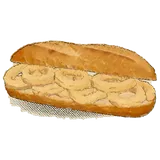
Bocadillo de calamares
Also known as Squid sandwich, Bocadillo de calamares a la romana
2 places claim to have invented this one. The case file is below.
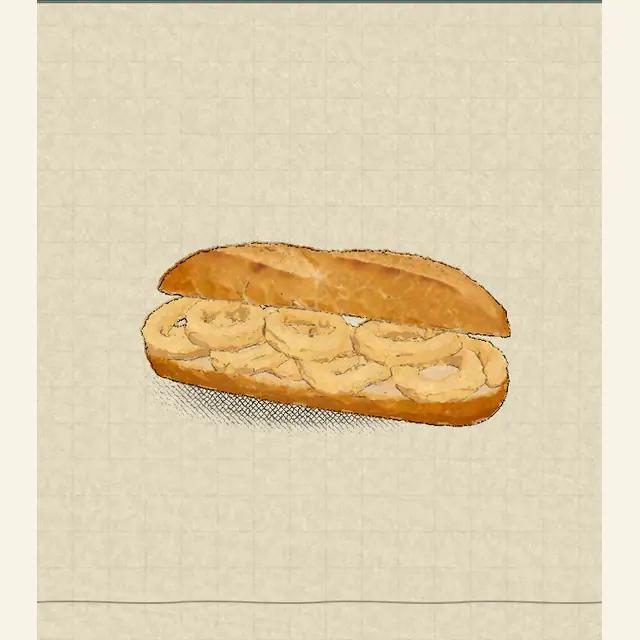
Medium confidenceAnatomy of the Bocadillo de calamares
Origin story
Madrid, Spain · 40.42°N, 3.71°W
No one seriously disputes that this is a Madrid dish, but nobody can name who invented it, and the sources genuinely disagree on when.
No one seriously disputes that this is a Madrid dish, but nobody can name who invented it, and the sources genuinely disagree on when. The most common account is a street vendor, sometime in the 1920s to 1940s, frying up squid that would not sell whole and putting it in bread as a way to move it before it spoiled, a plausible story built more on the logic of the dish than on a documented event. The oldest concrete data point is a bar, El Brillante, which opened opposite Atocha station in 1952 and is remembered as an early and prominent seller, though that is evidence of popularity rather than invention. What is well documented is why Madrid, a city two hours from the sea, ended up as the sandwich's home at all: it runs the world's second-largest fish market after Tsukiji, squid travelled well packed in ice before refrigeration, and Catholic meat-free days kept demand for fried seafood high.
1952
El Brillante, a bar opposite Atocha station, opens and becomes known as an early and prominent seller of the squid sandwich [3]
The Dispute
We don't adjudicate. Here is the evidence for each claim, neutrally, with its source.
Madrid, Spain
No one seriously disputes that this is a Madrid dish, but nobody can name who invented it, and the sources genuinely disagree on when. The most common account is a street vendor, sometime in the 1920s to 1940s, frying up squid that would not sell whole and putting it in bread as a way to move it before it spoiled, a plausible story built more on the logic of the dish than on a documented event. The oldest concrete data point is a bar, El Brillante, which opened opposite Atocha station in 1952 and is remembered as an early and prominent seller, though that is evidence of popularity rather than invention. What is well documented is why Madrid, a city two hours from the sea, ended up as the sandwich's home at all: it runs the world's second-largest fish market after Tsukiji, squid travelled well packed in ice before refrigeration, and Catholic meat-free days kept demand for fried seafood high.
Evidence: [3]
Unnamed claim
A widely repeated street-vendor legend places the sandwich's invention two to three decades earlier than El Brillante, sometime in the 1920s-1940s, as a way to sell squid that would otherwise spoil, undocumented and impossible to verify against a bar's opening date.
Evidence: [2]
Our reconstruction
Notes on this reconstruction
The construction is not really in dispute anywhere: fried squid rings in a crusty roll, nothing else required, which is why this sits above contested despite the origin story being genuinely uncertain. The one real choice is the batter: a la romana means dipped in flour then egg before frying, which gives a thin, crisp, pale coating rather than a thick American-style breading. We give that version because it is what "bocadillo de calamares" specifically refers to in Madrid, as opposed to andaluza-style floured-only squid.
- Yield
- 2 sandwiches
Method
Pat the squid rings completely dry: any surface water will make the batter slip and spit in the oil.
Dip each ring in flour, shake off the excess, then dip in the beaten egg. Keep it light; a la romana batter is thin, not a thick crust.
Heat the olive oil to a proper frying temperature and fry the rings in small batches for around a minute, until pale gold and just firm. Do not crowd the pan: the temperature drops fast and the squid turns rubbery if it stews rather than fries.
Drain on paper and salt immediately, while the oil is still clinging to the surface so the salt sticks.
Split the rolls and spread with alioli if using.
Pack the squid in tightly along the length of the roll (a proper bocadillo is stuffed, not sparse) and serve with a lemon wedge on the side, not squeezed on in advance, or the coating goes soft.
Sources
- Squid sandwich: Wikipedia (retrieved 2026-09-24) Madrid origin; second-largest seafood market after Tsukiji; Plaza Mayor and Calle de Botoneras as present-day centres
- The Bocadillo de Calamares Is the Spanish Sandwich That Should Take Over the World: InsideHook (retrieved 2026-09-24) "No one knows exactly who invented" it; street-vendor leftover-squid theory, undated but placed roughly a century back
- This Spanish Seafood Sandwich Typically Features Just One Ingredient Besides Bread: Tasting Table (retrieved 2026-09-24) 1930s-1940s invention estimate; El Brillante bar, opened 1952 opposite Atocha station, as an early documented seller