Bifana
Time Immemorial

Bifana
2 places claim to have invented this one. The case file is below.
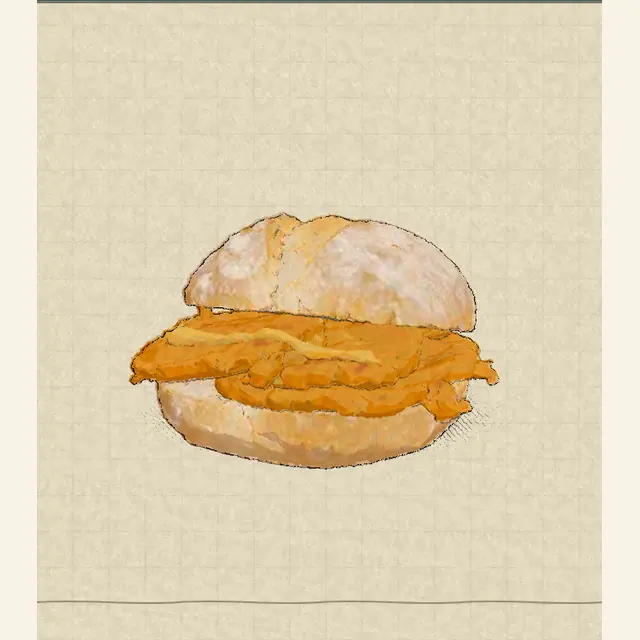
Medium confidenceAnatomy of the Bifana
Origin story
Vendas Novas, Portugal · 38.68°N, 8.46°W
Most accounts trace the bifana to Vendas Novas, a small Alentejo town on the road between Lisbon and Évora, where it was sold from roadside tascas to travellers and, later, truck drivers.
Most accounts trace the bifana to Vendas Novas, a small Alentejo town on the road between Lisbon and Évora, where it was sold from roadside tascas to travellers and, later, truck drivers. But the town-level claim does not resolve any further than that: multiple establishments within Vendas Novas itself each assert they hold the "original" recipe, and no source we found could adjudicate between them, so even naming the town does not name a kitchen or a date. The name comes from "bife" (itself borrowed into Portuguese from English "beef" via nineteenth-century Lisbon trade) with the diminutive "-ana" suffix added. From Vendas Novas the sandwich spread nationally and split into regional styles: a lighter, wine-marinated cutlet in the south, and a heartier, paprika-forward, sauce-soaked version in the north around Porto.
No earliest documentary reference found, so the record is open. If you have one, that's worth more to us than another retelling.
The Dispute
We don't adjudicate. Here is the evidence for each claim, neutrally, with its source.
Vendas Novas, Portugal
Most accounts trace the bifana to Vendas Novas, a small Alentejo town on the road between Lisbon and Évora, where it was sold from roadside tascas to travellers and, later, truck drivers. But the town-level claim does not resolve any further than that: multiple establishments within Vendas Novas itself each assert they hold the "original" recipe, and no source we found could adjudicate between them, so even naming the town does not name a kitchen or a date. The name comes from "bife" (itself borrowed into Portuguese from English "beef" via nineteenth-century Lisbon trade) with the diminutive "-ana" suffix added. From Vendas Novas the sandwich spread nationally and split into regional styles: a lighter, wine-marinated cutlet in the south, and a heartier, paprika-forward, sauce-soaked version in the north around Porto.
Evidence: [1]
Vendas Novas, Portugal
Within Vendas Novas, several restaurants each claim to have originated the town's bifana, with no documentary record to settle the question: the town-level attribution is solid, the specific kitchen is not.
Evidence: [1]
Our reconstruction
Notes on this reconstruction
We give the lighter southern/Lisbon-style build (thin marinated pork cutlets rather than the northern shredded, paprika-heavy, sauce-soaked version) because it is closer to the Alentejo original the Vendas Novas story describes. That is a choice between two legitimate regional constructions, not a finding, and the northern style is just as authentic to where it is eaten. The marinade needs real time; a bifana rushed straight from raw to pan tastes like a plain fried pork chop in bread rather than the thing itself.
- Yield
- 4 sandwiches
Method
Marinate the pork in the wine, garlic, bay leaves, paprika and chilli for at least four hours, ideally overnight: this is where most of the flavour comes from, not the pan.
Lift the meat out and pat it dry, keeping the marinade.
Fry the cutlets in hot lard or oil in batches, a minute or so per side, until just cooked: they are thin and overcook fast.
Once all the meat is out, pour the reserved marinade into the same pan and reduce it hard for a couple of minutes to burn off the raw wine edge and concentrate it into a sauce.
Warm the rolls, split them, and spread mustard inside.
Pile in the pork, spoon over a little of the reduced sauce, and close. Eat while the bread is still warm from the pan.
Sources
- Bifana (Portuguese Marinated Pork Sandwich): Curious Cuisiniere (retrieved 2026-09-24) Vendas Novas origin claim; multiple restaurants within the town each claiming the original recipe; Lisbon vs Porto regional style differences
- Bifana: Wikipedia (retrieved 2026-09-24) Etymology from "bife"; Vendas Novas cited via Taste Atlas; northern shredded/sauced vs southern cutlet-and-marinade regional styles