Katsu sando
Jazz Age
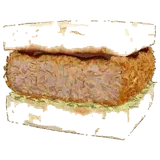
Katsu sando (かつサンド)
Also known as Pork cutlet sandwich, Tonkatsu sandwich
On the record since 1935. Uncontested: Ueno, Tokyo, Japan takes the credit.
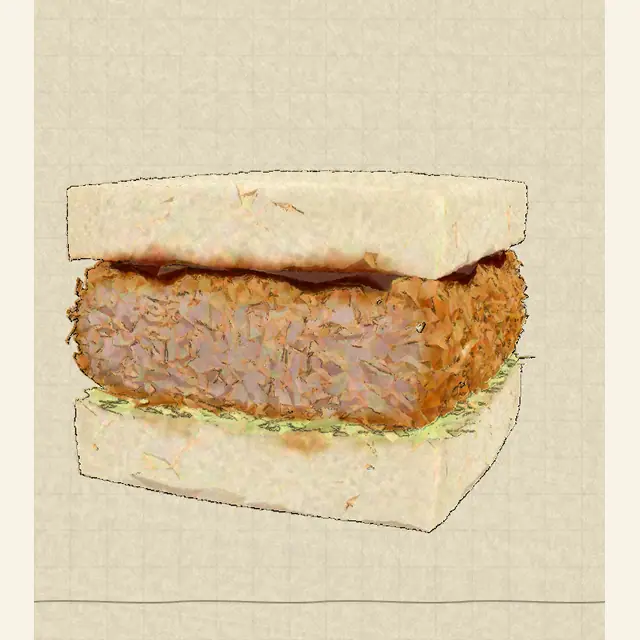
High confidenceAnatomy of the Katsu sando
Origin story
Ueno, Tokyo, Japan · 35.71°N, 139.78°E
Invented in 1935 by Toki Ishizaka, landlady of the tonkatsu restaurant Isen in Ueno, which had opened five years earlier.
Invented in 1935 by Toki Ishizaka, landlady of the tonkatsu restaurant Isen in Ueno, which had opened five years earlier. She took the idea from the ham sandwich and applied it to a pork cutlet so it could be eaten by hand like sushi. Ueno was a hanamachi district, and the design follows from the clientele: small pieces, crusts off, so a geisha could eat one without disturbing her lipstick. Ishizaka wrote it かつサンド, in hiragana, not the katakana カツサンド now more common. Isen is still trading on the same site.
1935
Isen, Ueno: Toki Ishizaka's かつサンド, created for the local hanamachi clientele [1]
Our reconstruction
Notes on this reconstruction
Crusts off and cut small is not fussiness, it is the original specification: the sandwich was designed to be eaten neatly in public. Shokupan (Japanese milk bread) is doing real work here: it is soft enough to compress around the cutlet instead of fighting it. We use pork loin rather than fillet for fat and flavour, and we rest the assembled sandwich before cutting, which gives a far cleaner cross-section.
- Yield
- 1 sandwich, cut into 3
Method
Snip through the membrane between fat and meat at intervals so the cutlet does not curl, then beat it lightly to an even thickness and season.
Dredge in flour, knocking off the excess, then egg, then panko: press the crumbs on firmly and leave the cutlet to sit for 5 minutes so the coating sets.
Fry at 170°C for about 5 minutes, turning once, until deep gold. Drain upright on a rack, never flat on paper, or the underside goes soft.
Rest the cutlet 3 minutes, then cut it into strips the width of the bread so every bite gets an edge.
Butter both slices of bread to the edges: this waterproofs them against the sauce.
Brush the cutlet generously with tonkatsu sauce, add mustard and cabbage if using, and close the sandwich.
Wrap tightly in baking paper and rest 5 minutes. Then trim the crusts off all four sides and cut into three fingers.
Sources
- Katsu-sando: Wikipedia (retrieved 2026-09-22) 1935, Toki Ishizaka, Isen, Ueno; hiragana かつサンド; hanamachi clientele
- From geishas to the world: Katsu sando, then and now, SBS Food (retrieved 2026-09-22) Crustless small format; design rationale
- Katsu Sando (Pork Cutlet Sandwich): RecipeTin Japan (retrieved 2026-09-22) Technique reference