Bun kebab
Time Immemorial
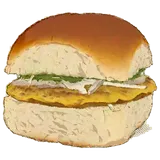
Bun kebab (بن کباب)
Also known as bun kabab, bun kebab Karachi, anda shami burger, anday wala burger, shami burger, poor man's burger
3 places claim to have invented this one. The case file is below.
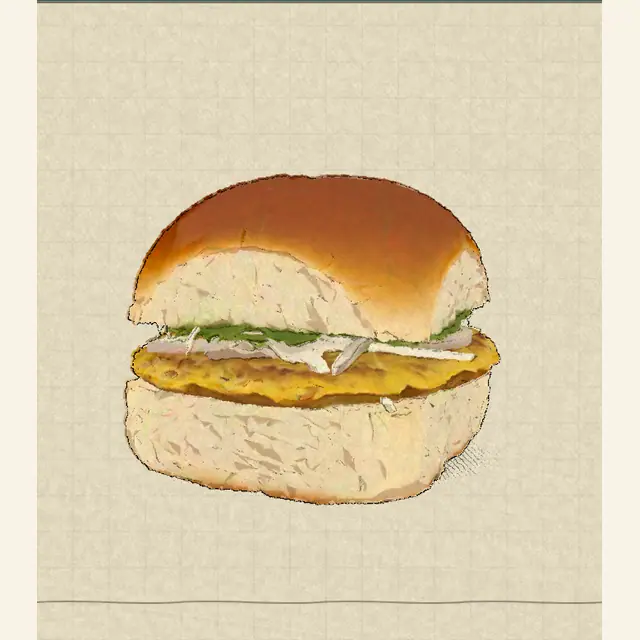
Medium confidenceAnatomy of the Bun kebab
Origin story
Karachi, Sindh, Pakistan · 24.86°N, 67.00°E
Everyone places it in Karachi's street stalls in the 1950s, a few years after Partition, as a cheap hot meal sold from carts and kiosks.
Everyone places it in Karachi's street stalls in the 1950s, a few years after Partition, as a cheap hot meal sold from carts and kiosks. The best-known family account comes from a third-generation stallholder on Burns Road, who told the BBC his grandfather started it there in the 1950s; the BBC notes that pinning down a definitive first bun kebab is difficult. All of this is oral or recollection: we found no dated written reference to the first one. The earliest written piece we could verify is an Express Tribune feature from 2010 that already treats it as an established Karachi staple. The first versions are said to have been a spiced potato patty in a plain bun; shami kebab and egg-and-lentil patties came later.
No earliest documentary reference found, so the record is open. If you have one, that's worth more to us than another retelling.
The Dispute
We don't adjudicate. Here is the evidence for each claim, neutrally, with its source.
Everyone places it in Karachi's street stalls in the 1950s, a few years after Partition, as a cheap hot meal sold from carts and kiosks. The best-known family account comes from a third-generation stallholder on Burns Road, who told the BBC his grandfather started it there in the 1950s; the BBC notes that pinning down a definitive first bun kebab is difficult. All of this is oral or recollection: we found no dated written reference to the first one. The earliest written piece we could verify is an Express Tribune feature from 2010 that already treats it as an established Karachi staple. The first versions are said to have been a spiced potato patty in a plain bun; shami kebab and egg-and-lentil patties came later.
Khayam Cinema area, Karachi, Pakistan
Wikipedia reports a claim that it began outside the Khayam Cinema in Karachi, made mainly for cinema-goers, and Google Arts & Culture repeats a 1950s kiosk outside the same cinema. Wikipedia also names Haji Abdul Razzak as having introduced it in 1953 as a quick meal for workers, and says the exact beginning is debated. We could not trace either claim to a primary record. Coordinates are approximate for central Karachi.
Evidence: [4]
Mumbai, India
Wikipedia also lists a theory that the bun kebab evolved from Mumbai's vada pav, a fried potato patty in a soft bun. It is a resemblance argument rather than a documented line of descent.
Evidence: [1]
Our reconstruction
Notes on this reconstruction
We give the Karachi stall build as the sources describe it: a thin shami-style patty of minced beef and lentils, dipped in whipped egg just before it goes on a ghee-slicked tawa; a soft, slightly sweet bun split, greased and griddled; green mint-coriander chutney with tamarind; raw onion. Stalls vary: the BBC describes thin shami or potato patties, the Express Tribune lists egg-and-lentil, seekh, potato and chapli patties, and Wikipedia adds chicken, mutton and plain egg. The popular orders are 'anda' (egg), 'daal' (lentil) and 'aloo' (potato), so there is no single patty. We chose beef and lentil because it is the commonest shami version in the sources, and note the potato version below. The Google Arts & Culture page says the traditional bun is square and the Wikipedia photo of a Karachi plate shows pav-style buns joined in a row; most recipes outside Pakistan use round burger buns, which is why we file it as round-bun and why it is only a rough fit. Toppings drift: tomato, cucumber, lettuce, beetroot, cabbage, raita, ketchup and fries all appear in some source. Stalls often shape and egg-dip each patty to order and sometimes press the bun back on the griddle with the filling in. Confidence is medium: the build is consistent, the stall-to-stall variation is large and the origin is oral.
- Yield
- 4 bun kebabs
Method
Cook the minced beef with the lentils, onion, chilli, ginger, garlic and dry spices with a splash of water until the meat is done and all the liquid has gone. Cool, then grind or pulse to a coarse paste and mix in one egg and the salt.
With wet hands shape thin patties, about 9 cm across and 1 cm thick, and chill them for an hour so they hold together.
Whisk the remaining two eggs to a froth. Heat ghee on a wide flat pan or tawa. Dip each patty in the egg just before it goes down and fry two or three minutes a side, pressing lightly, until crisp and golden. A thin egg coat will cling and cook into a lacy skin.
Split the buns, grease the cut faces with ghee and toast them on the same pan until golden and slightly crisp outside but still soft inside.
Spread green chutney on the base and a little tamarind chutney on the lid. Lay on the patty, then raw onion rings, with tomato, cucumber or a fried egg if you like.
Close, return it to the griddle for a few seconds to warm through, and eat straight away in the hand. Potato version: swap the meat and lentils for boiled mashed potato with chilli and spices, same egg dip.
Sources
- Bun kebab: Wikipedia (retrieved 2026-10-30) 1950s Karachi, origin debated (Haji Abdul Razzak 1953, Khayam Cinema, vada pav theory); patty variants shami, aloo, anda, daal; ghee-fried patty, grilled bun; tamarind chutney, raita; Burns Road; article carries a needs-citations tag
- Pakistan's beloved 'poor man's burger': BBC Travel (retrieved 2026-10-30) Aysha Imtiaz, 2021: thin shami or potato patties in fluffy milky buns, chutney and salad, optional fried egg; 50 to 120 rupees; Burns Road family says 1950s; egg dipped just before frying, bun greased on all sides; anda/daal/aloo orders
- The Street Favourite: Bun Kebabs: The Express Tribune (retrieved 2026-10-30) 2010 feature: Karachi vendors at Pakistan Chowk, Burns Road, Bahadurabad, Gizri; patty fried and bun toasted in front of the customer; mint chutney and sliced onions; egg-and-lentil, seekh, potato and chapli variants; called shami burger in Lahore
- Bun Kabab: The King of Street Food: Google Arts & Culture (retrieved 2026-10-30) 1950s Karachi kiosk outside Khayam Cinema; origin 'unknown, though stories exist'; egg-batter-dipped kebab fried on a tawa; traditional bun square; green chutney with tamarind; onions
- Pakistan's Patty Kings: Roads & Kingdoms (retrieved 2026-10-30) Karachi roadside stalls; shami and lentil or potato patties, egg-dipped and shallow-fried; bun browned on a griddle in clarified butter, pressed with a spatula; onions, tamarind chutney, cucumber, tomato
- Bun kabab recipe: SBS Food (retrieved 2026-10-30) Lamb and lentil patty fried in ghee, buns toasted in the pan ghee, tamarind chutney, onion, tomato, cucumber, fried egg; used for quantities and method order only