Vada pav
Atomic Drive-In
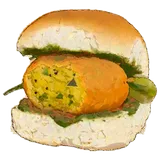
Vada pav (वडापाव)
2 places claim to have invented this one. The case file is below.
Medium confidenceAnatomy of the Vada pav
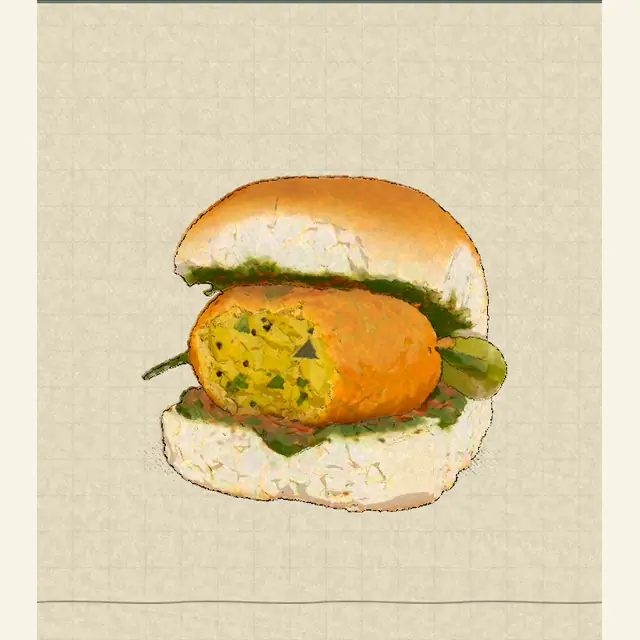
Origin story
Dadar, Mumbai, India · 19.02°N, 72.84°E
Ashok Vaidya ran a stall opposite Dadar railway station selling poha, batata vada and tea to mill workers and commuters.
Ashok Vaidya ran a stall opposite Dadar railway station selling poha, batata vada and tea to mill workers and commuters. He noticed customers buying a vada and a pav separately and, in 1966, put them together with a garlic chutney and sold them as one thing, food you could buy and eat inside the few minutes a rush-hour commute allows. The context matters: 1960s Mumbai had Bal Thackeray urging Maharashtrians toward self-employment, and street vending was one of the few doors open. Vaidya died in 1998; his son Narendra still sells them outside platform one.
1966
Ashok Vaidya's stall opposite Dadar station: the first dedicated vada pav stall [1]
The Dispute
We don't adjudicate. Here is the evidence for each claim, neutrally, with its source.
Dadar, Mumbai, India
Ashok Vaidya ran a stall opposite Dadar railway station selling poha, batata vada and tea to mill workers and commuters. He noticed customers buying a vada and a pav separately and, in 1966, put them together with a garlic chutney and sold them as one thing, food you could buy and eat inside the few minutes a rush-hour commute allows. The context matters: 1960s Mumbai had Bal Thackeray urging Maharashtrians toward self-employment, and street vending was one of the few doors open. Vaidya died in 1998; his son Narendra still sells them outside platform one.
Evidence: [1]
Mumbai, India
The 1966 date and sole attribution rest largely on family testimony and later reporting rather than contemporary documentation, and both vada and pav long predate the pairing. Treat Vaidya as the person who made it a named, sold item rather than the first human to put one inside the other.
Evidence: [2]
Our reconstruction
Notes on this reconstruction
Confidence is medium rather than high because the construction is well attested but the exact 1966 chutney is not: no contemporary recipe survives, so the dry garlic chutney here is the standard Mumbai version rather than a documented reconstruction of Vaidya's. The pav is a Portuguese inheritance, which makes this sandwich a collision of Goan bread, Maharashtrian street food and a railway timetable.
- Yield
- 4 vada pav
Method
Temper mustard seeds in hot oil until they pop, then add curry leaves, asafoetida, green chilli and ginger-garlic paste and fry for a minute.
Stir in turmeric, then the mashed potato, salt and coriander. Mix, cool, and roll into four balls.
Whisk the gram flour with water, salt and a pinch of turmeric to a batter about the thickness of pouring cream.
Heat oil to 180°C. Coat each ball fully and fry until the crust is set and pale gold, about 4 minutes. Do not let it darken; the vada should stay soft.
Fry the whole green chillies for a few seconds in the same oil and salt them.
Split each pav almost through, keeping a hinge. Spread green chutney on one inner face and dry garlic chutney on the other.
Press a hot vada inside, scatter a little more dry chutney over it, close, and serve at once with a fried chilli.
Sources
- How Old is Mumbai's Iconic Vada Pav? Find out From the Family Who Invented It!: The Better India (retrieved 2026-09-22) Family account; Narendra Vaidya still trading at Dadar
- Vada pav: Wikipedia (retrieved 2026-09-22) 1966 Ashok Vaidya, Dadar station; mill-worker and commuter context; death 1998