Butifarra
Victorian / Belle Époque
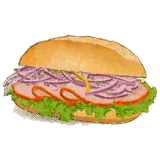
Butifarra
Also known as Butifarra limeña, Sánguche de jamón del país, Peruvian butifarra
3 places claim to have invented this one. The case file is below.
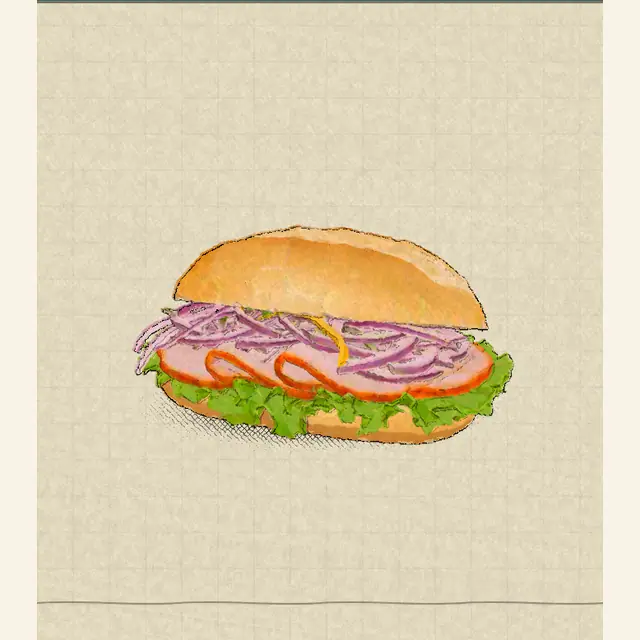
Medium confidenceAnatomy of the Butifarra
Origin story
Centro de Lima, Peru · 12.05°S, 77.03°W
The butifarra is a Lima sandwich, and the earliest written trace we found is Juan de Arona's Diccionario de peruanismos of 1884, which describes it being sold in chinganas (cheap taverns), at bullfights and sometimes on…
The butifarra is a Lima sandwich, and the earliest written trace we found is Juan de Arona's Diccionario de peruanismos of 1884, which describes it being sold in chinganas (cheap taverns), at bullfights and sometimes on the street. By the late nineteenth century a street seller called the butifarrero was working the exit of the Acho bullring, until hot dogs and other street food pushed him out in the mid-1950s. Peruvian press accounts put the roots further back, in the colonial taste for cured and cooked pork the Spanish brought; the name itself is borrowed from the Catalan sausage. The sandwich as Lima now knows it was carried by the old bodegas and bars of the historic centre, several of them founded by Italian immigrants, which still serve it.
1884
Juan de Arona (Pedro Paz Soldán y Unanue), Diccionario de peruanismos: the butifarra sold in chinganas, at bullfights and occasionally in the street [1]
The Dispute
We don't adjudicate. Here is the evidence for each claim, neutrally, with its source.
The butifarra is a Lima sandwich, and the earliest written trace we found is Juan de Arona's Diccionario de peruanismos of 1884, which describes it being sold in chinganas (cheap taverns), at bullfights and sometimes on the street. By the late nineteenth century a street seller called the butifarrero was working the exit of the Acho bullring, until hot dogs and other street food pushed him out in the mid-1950s. Peruvian press accounts put the roots further back, in the colonial taste for cured and cooked pork the Spanish brought; the name itself is borrowed from the Catalan sausage. The sandwich as Lima now knows it was carried by the old bodegas and bars of the historic centre, several of them founded by Italian immigrants, which still serve it.
Lima, Peru
Diario Correo, quoting Edil Ramos Zamora, says the butifarra was born in the colonial period, when Peruvian eating adopted cured meats, and was probably first sold at bullfights in republican Lima.
Evidence: [5]
Centro de Lima, Peru
América TV credits the recipe to Italian migrants in central Lima more than a century ago, and English Wikipedia says it was popularised in the fondas and bars of the Italian immigrant community. This is a claim about who shaped the modern sandwich rather than who first made one.
Evidence: [6]
Our reconstruction
Notes on this reconstruction
The four-part build is documented and consistent: pan francés, jamón del país, lettuce and salsa criolla. El Comercio's guide to Lima's best butifarras lists exactly those four, and so does Diario Correo. Home recipes from Andina and Peru Delights add a spread of mayonnaise, mustard and ají amarillo; Correo and English Wikipedia treat mustard as an occasional extra. We leave the spread optional because the bars that define the sandwich are described without it. Some recipes swap in ciabatta or a roseta roll; we keep pan francés, the everyday Lima roll. Jamón del país is not cured ham but a boned pork leg seasoned with garlic, ají panca, achiote and cumin, tied, simmered and sliced cold; achiote is what gives its edge the orange-red colour. That method is assembled from Correo and Eat Peru, not taken from any one bodega. Archetype is round-bun: pan francés is a small, roundish crusty roll split horizontally.
- Yield
- 8 sandwiches, with ham to spare
Method
Pound the garlic, ají panca, achiote, cumin, oregano, salt and pepper into a paste and rub it all over the pork. Leave it for at least half an hour.
Roll the leg up tightly and tie it with kitchen string so it holds a compact shape.
Put it in a pot with the onion and enough water to come most of the way up, cover, and simmer gently for an hour or more, turning it now and then, until tender. Lift it out and let it cool completely before slicing; warm, it falls apart.
For the salsa criolla, rinse the sliced onion in cold salted water to take the sting out, drain it, then toss with the chilli strips, lime juice, salt and coriander. Give it ten minutes.
Split each roll horizontally, keeping a hinge. Spread on mustard or ají mayonnaise first if you want it.
Lay in a lettuce leaf, then two or three slices of the cold ham, folded slightly so they stand up from the bread.
Top with a generous heap of salsa criolla, drained so it does not soak the bread, and close. Serve at once.
Sources
- Butifarra (sándwich): Wikipedia en español (retrieved 2026-10-30) Juan de Arona, Diccionario de peruanismos (1884); butifarrero at Acho; displaced mid-1950s; pan francés or roseta, jamón del país, salsa criolla, lettuce
- Guía de la butifarra: los 10 mejores lugares para disfrutarlas en Lima: El Comercio (retrieved 2026-10-30) Jamón del país, pan francés, salsa criolla and lettuce; Cordano, Carbone, El Chinito, Queirolo
- Butifarras, much more than a ham sandwich: Peru Delights (retrieved 2026-10-30) Catalan name; colonial roots; Italian-made jamón del país; roseta roll; radishes and chilli in older versions; mayo, mustard and ají spread
- ¿Quieres preparar tu propia butifarra en casa? Sigue esta receta: Andina (retrieved 2026-10-30) Home recipe: warmed roll, ají amarillo mayonnaise and mustard, lettuce, two slices of ham, salsa criolla of onion, ají amarillo and lime
- Ruta de la butifarra: restaurantes y recetas de esta estrella de la cocina peruana: Diario Correo (retrieved 2026-10-30) Colonial origin per Edil Ramos Zamora; bullfights in republican Lima; jamón del país method (boned leg, ají panca, achiote, cumin, tied and simmered); pan francés; mustard optional
- La butifarra, el sándwich más rico del mundo y peruano: América TV (retrieved 2026-10-30) Recipe credited to Italian migrants in central Lima; boned pork leg slow-cooked with achiote and garlic
- Sanguchería: Wikipedia (retrieved 2026-10-30) Popularised in Italian immigrant fondas and bars; jamón del país coloured with achiote, unlike jamón del norte; pan francés; occasional mustard
- Jamón del país (Peruvian country ham): Eat Peru (retrieved 2026-10-30) Boneless loin or leg, simmered then finished; achiote gives an orange colour; sliced cold