Beirute
Time Immemorial
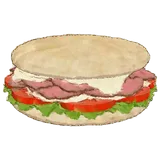
Beirute
Also known as Sanduíche beirute, Beirut sandwich
2 places claim to have invented this one. The case file is below.
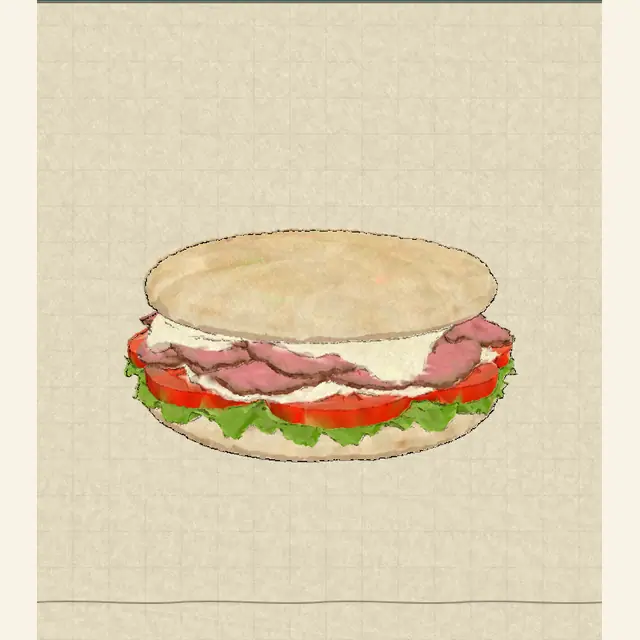
Medium confidenceAnatomy of the Beirute
Origin story
Restaurante Bambi, Alameda Santos, São Paulo, Brazil · 23.57°S, 46.65°W
Credited to Fares (also spelled Farer) Sader, a Lebanese immigrant and partner in the Bambi restaurant on Alameda Santos, who is said to have made it in 1951 from Arabic flatbread and named it after Beirut as a nod to…
Credited to Fares (also spelled Farer) Sader, a Lebanese immigrant and partner in the Bambi restaurant on Alameda Santos, who is said to have made it in 1951 from Arabic flatbread and named it after Beirut as a nod to his homeland. The first version, as the Portuguese Wikipedia tells it, was roast beef, mozzarella, za'atar and tomato in flatbread. Lettuce, egg and ham are later additions. The date and the name of the creator come from a handful of secondary accounts, and we found no period menu or press item.
No earliest documentary reference found, so the record is open. If you have one, that's worth more to us than another retelling.
The Dispute
We don't adjudicate. Here is the evidence for each claim, neutrally, with its source.
Restaurante Bambi, Alameda Santos, São Paulo, Brazil
Credited to Fares (also spelled Farer) Sader, a Lebanese immigrant and partner in the Bambi restaurant on Alameda Santos, who is said to have made it in 1951 from Arabic flatbread and named it after Beirut as a nod to his homeland. The first version, as the Portuguese Wikipedia tells it, was roast beef, mozzarella, za'atar and tomato in flatbread. Lettuce, egg and ham are later additions. The date and the name of the creator come from a handful of secondary accounts, and we found no period menu or press item.
Evidence: [3]
São Paulo, Brazil
One São Paulo food site says the name honoured a Lebanese customer rather than the creator's homeland. We could not find the reasoning behind this, and it contradicts the account given by Sader's family.
Evidence: [3]
Our reconstruction
Notes on this reconstruction
Sources agree on the core: Arabic flatbread, roast beef, melted white cheese, tomato. The original is reported to include za'atar; we keep it as a light sprinkle that you will not see. Lettuce is a very common modern addition and appears in most photographs, so we include it. Egg and ham versions exist but are not this record. The English Wikipedia says the bread is used as two whole rounds with the filling between them, not as a pocket, and we follow that: two warm flatbread rounds, filling in the middle.
- Yield
- 1 sandwich
Method
Warm the two flatbread rounds on a dry pan or griddle until soft and a little blistered.
Put the mozzarella on the lower round and leave it on the heat for a moment so it starts to soften.
Pile on the roast beef, then the tomato slices, and dust with a pinch of za'atar.
Add the lettuce, set the second round on top and press down gently.
Cut across into halves and serve while the cheese is still soft.
Sources
- Beirute: Wikipedia (retrieved 2026-11-16) São Paulo sandwich created 1951 by Farer Sader; two whole breads, not a pocket; common fillings
- Beirute (sanduíche): Wikipédia (retrieved 2026-11-16) Original recipe from a partner of the Bambi restaurant on Alameda Santos: pão sírio, muçarela, zatar, rosbife, tomate
- Sanduíche beirute: Correio Braziliense (retrieved 2026-11-16) Fares Sader, partner at Bambi, Alameda Santos; named for Lebanon