Lobster roll
Jazz Age
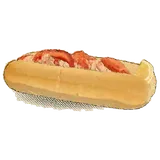
Lobster roll
On the record since 1929. Uncontested: Milford, Connecticut, USA takes the credit.
Medium confidenceAnatomy of the Lobster roll
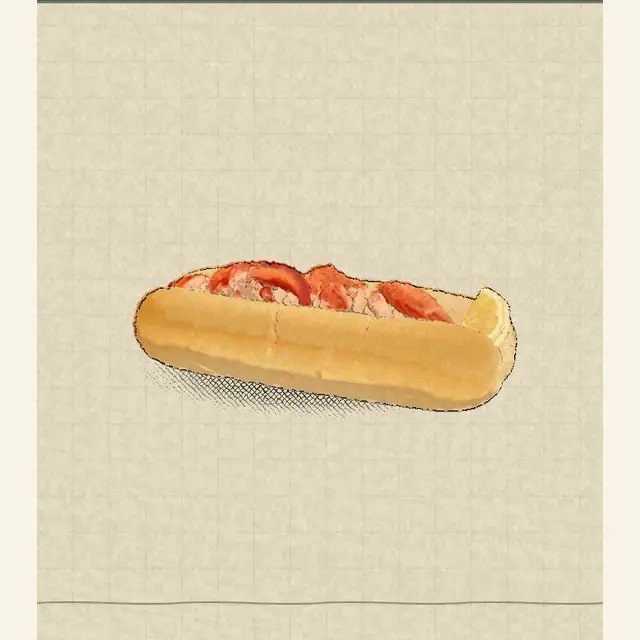
Origin story
Milford, Connecticut, USA · 41.22°N, 73.06°W
Harry Perry, owner of Perry's restaurant in Milford, is credited with putting together the first lobster roll in the late 1920s (accounts give either 1928 or 1929) for a regular customer who asked for a lobster sandwich.
Harry Perry, owner of Perry's restaurant in Milford, is credited with putting together the first lobster roll in the late 1920s (accounts give either 1928 or 1929) for a regular customer who asked for a lobster sandwich. Perry diced lobster tail and claw meat and coated it in warm butter, then worked with the nearby French's Bakery in Bridgeport to develop a crusty roll sturdy enough not to turn to mush under the butter and warm meat. Perry's kept a sign reading 'Home of the Famous Lobster Roll' out front until 1977. This is the Connecticut, warm-and-buttered lineage; it predates the cold, mayonnaise-dressed 'Maine-style' roll that most people now picture first, which developed later along the wider New England coast.
1929
Harry Perry serves a warm, butter-coated lobster sandwich to a regular customer at Perry's restaurant in Milford: the origin later marked by the restaurant's 'Home of the Famous Lobster Roll' sign [1]
Our reconstruction
Notes on this reconstruction
The Connecticut, warm-butter style is what the origin story actually describes, so that's the version we build, rather than the cold mayonnaise 'Maine-style' roll that dominates lobster shacks today. No original Perry's recipe survives in writing, so exact quantities and technique are our reconstruction from the documented description (diced meat, warm butter, a sturdy crusty roll) rather than a transcription of anything written down at the time.
- Yield
- 1 roll
Method
Warm half the butter gently in a small pan (it should melt, not brown) and fold the diced lobster meat through it just until heated through. Overcooking already-cooked lobster meat toughens it fast, so this is seconds, not minutes.
Season the warmed lobster with a squeeze of lemon, salt and a grind of pepper, then hold it off the heat.
Butter the flat outer sides of the split-top roll generously.
Griddle the roll on both flat faces in a hot pan until golden and crisp: this crust is what keeps the roll from collapsing under the warm, buttery filling.
Pile the lobster into the toasted roll immediately, letting a little of the butter run down into the bread.
Serve hot, right away: this style does not hold or travel well, which is part of why it stayed a Connecticut specialty rather than spreading as fast as the cold version.
Sources
- Perry's Restaurant In Connecticut Is Where The Lobster Roll Was Invented: Tasting Table (retrieved 2026-09-24) Harry Perry, late 1920s, French's Bakery roll
- Lobster roll: Wikipedia (retrieved 2026-09-24) Connecticut warm-butter vs Maine cold-mayo styles
- The Original New England Lobster Roll Was Invented In 1920s Connecticut: Only In Your State (retrieved 2026-09-24)