Jaffle
Wartime
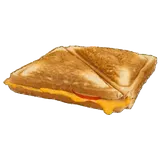
Jaffle
Also known as Toastie
2 places claim to have invented this one. The case file is below.
High confidenceAnatomy of the Jaffle
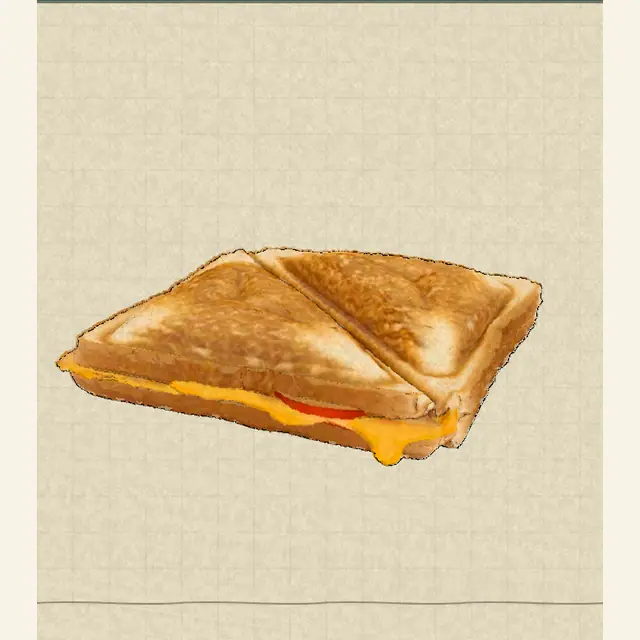
Origin story
Bondi, Sydney, Australia · 33.89°S, 151.28°E
The jaffle iron, a long-handled, hinged cast-iron press that crimps two slices of bread shut around a filling and toasts them over direct heat, was designed, named and patented by Dr Ernest E.
The jaffle iron, a long-handled, hinged cast-iron press that crimps two slices of bread shut around a filling and toasts them over direct heat, was designed, named and patented by Dr Ernest E. Smithers, a Bondi-based physician, in June 1949 (Australian design registration No. 27089). It descends from much older wafer and waffle irons; Smithers's specific contribution was the deep crimped seal that traps a hot, often wet filling without it leaking, plus marketing it as a 'pressure toaster,' riding the postwar popularity of pressure cookers. By 1950, grocers and food manufacturers such as Edgell were already selling tinned fillings made specifically for it, and the jaffle iron became a fixture of Australian kitchens through the 1950s. A true jaffle is defined by that seal (bread crimped shut on all sides), which is what still distinguishes it from an open-edged toasted sandwich.
1949
Dr Ernest E. Smithers designs, names and patents the jaffle iron in Bondi, Sydney (Australian design registration No. 27089) [1]
The Dispute
We don't adjudicate. Here is the evidence for each claim, neutrally, with its source.
Bondi, Sydney, Australia
The jaffle iron, a long-handled, hinged cast-iron press that crimps two slices of bread shut around a filling and toasts them over direct heat, was designed, named and patented by Dr Ernest E. Smithers, a Bondi-based physician, in June 1949 (Australian design registration No. 27089). It descends from much older wafer and waffle irons; Smithers's specific contribution was the deep crimped seal that traps a hot, often wet filling without it leaking, plus marketing it as a 'pressure toaster,' riding the postwar popularity of pressure cookers. By 1950, grocers and food manufacturers such as Edgell were already selling tinned fillings made specifically for it, and the jaffle iron became a fixture of Australian kitchens through the 1950s. A true jaffle is defined by that seal (bread crimped shut on all sides), which is what still distinguishes it from an open-edged toasted sandwich.
Evidence: [1]
Unnamed claim
The name's origin isn't firmly settled. The most repeated theory is that Smithers coined it as a play on 'waffle,' given the visual similarity between the two irons and their crimped patterns, but this is inference from the shape of the device rather than a documented statement from Smithers himself.
Evidence: [1]
Our reconstruction
Notes on this reconstruction
A jaffle is defined by the seal, not the filling, so almost any moist filling that would otherwise leak works once it's crimped shut. We give a classic cheese-and-tomato jaffle as the most consistently cited default of the 1950s craze, rather than treating it as the only 'correct' version. The device, not the recipe, is the thing that's genuinely original here.
- Yield
- 1 jaffle
Method
Butter one side of each slice of bread.
Lay one slice butter-side down and arrange the cheese and tomato on top, staying well inside the edge: filling right to the border stops the seal from closing.
Season, then top with the second slice, butter-side up.
Set the sandwich into a preheated jaffle iron (or a heavy sealed sandwich press) and close firmly, letting the crimping edge cut through and seal the bread on all four sides.
Cook over medium heat, turning once, for 3–4 minutes a side, until the outside is deep golden and the seal is fully set.
Rest for a minute before opening: the filling inside is very hot and the seal needs a moment to firm up, or it will burst open.
Sources
- Jaffle craze hits Australia: Australian Food Timeline (retrieved 2026-09-24) Dr Ernest E. Smithers, Bondi, June 1949, design registration No. 27089; Edgell tinned fillings by 1950; later Breville dominance
- What Is A Jaffle Sandwich?, Tasting Table (retrieved 2026-09-24) Confirms Smithers/1949 patent; defines the jaffle by its fully sealed, crimped edge