Torta ahogada
Time Immemorial
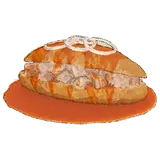
Torta ahogada
2 places claim to have invented this one. The case file is below.
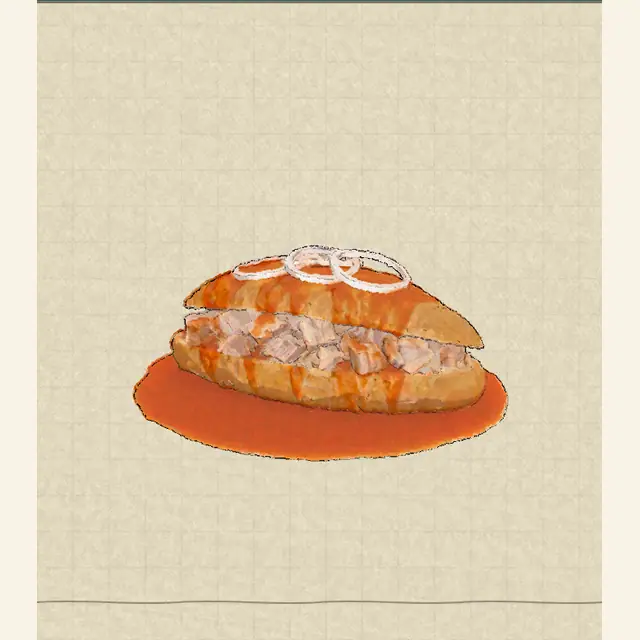
Medium confidenceAnatomy of the Torta ahogada
Origin story
Guadalajara, Jalisco, Mexico · 20.67°N, 103.35°W
Local lore credits a street food vendor remembered as 'El Güero,' selling near the Jardín de San Francisco in Guadalajara's historic centre in the 1920s, with the torta ahogada's invention: the accepted story is that a…
Local lore credits a street food vendor remembered as 'El Güero,' selling near the Jardín de San Francisco in Guadalajara's historic centre in the 1920s, with the torta ahogada's invention: the accepted story is that a filled roll was accidentally dropped into a pot of spicy tomato-chile sauce rather than thrown away, and the 'drowned' sandwich was born from serving it anyway. No source we found gives an exact year, only 'the 1920s,' so we're not asserting more precision than the record supports. The bread itself, the birote salado, has a separate and older origin story: during the French intervention era of the 1860s, a Frenchman remembered locally by a name Mexicans pronounced as 'birote' is credited with introducing French bread-baking technique to Guadalajara, adapting it, lacking European yeast and working in a different climate, into the region's distinct sourdough-leavened, hard-crusted loaf.
No earliest documentary reference found, so the record is open. If you have one, that's worth more to us than another retelling.
The Dispute
We don't adjudicate. Here is the evidence for each claim, neutrally, with its source.
Guadalajara, Jalisco, Mexico
Local lore credits a street food vendor remembered as 'El Güero,' selling near the Jardín de San Francisco in Guadalajara's historic centre in the 1920s, with the torta ahogada's invention: the accepted story is that a filled roll was accidentally dropped into a pot of spicy tomato-chile sauce rather than thrown away, and the 'drowned' sandwich was born from serving it anyway. No source we found gives an exact year, only 'the 1920s,' so we're not asserting more precision than the record supports. The bread itself, the birote salado, has a separate and older origin story: during the French intervention era of the 1860s, a Frenchman remembered locally by a name Mexicans pronounced as 'birote' is credited with introducing French bread-baking technique to Guadalajara, adapting it, lacking European yeast and working in a different climate, into the region's distinct sourdough-leavened, hard-crusted loaf.
Evidence: [2]
Unnamed claim
Accounts of the Frenchman behind the birote disagree on his exact identity: some name him a French army sergeant, Camille Perrault, present during the French intervention; others describe him instead as a Belgian baker, Camille Pirotte, working under Emperor Maximilian. Both versions agree on the era and on the loaf's name coming from a Mexican approximation of his surname.
Evidence: [2]
Our reconstruction
Notes on this reconstruction
The modern construction (birote, carnitas, drowned in a tomato-and-chile-de-árbol sauce) is consistently described and still what's served at the thousand-plus stands in Guadalajara today, but there's no written 1920s original to check it against, only a living street-food tradition. We use pork carnitas as the filling, the most commonly cited option, though some stands use other cuts of pork.
- Yield
- 1 sandwich
Method
Simmer the tomatoes with half the onion and garlic until soft, then blend into a smooth base salsa and season with salt: this is the mellow sauce the sandwich sits in.
Toast the dried chiles de árbol briefly in a dry pan until fragrant, then blend them with a little water, vinegar and garlic into a separate, much hotter salsa. Keep the two sauces apart until serving so the heat level stays adjustable.
Warm the shredded carnitas through in a little of their own fat.
Split the birote roll and fill it generously with the carnitas: don't hollow the crumb here the way you would for a lighter roll; the bread needs its density to survive being soaked.
Ladle the mellow tomato salsa over the filled roll in a deep dish until the bread is genuinely submerged, not just topped.
Spoon the hot chile de árbol salsa over the top to taste, garnish with pickled onion, and eat with a fork: this sandwich does not stay in one piece by hand.
Sources
- Torta ahogada: Wikipedia (retrieved 2026-09-24) Origin story; birote bread history, French sergeant account
- The Origin of the Torta Ahogada: Life & Thyme (retrieved 2026-09-24) 1920s dating; Belgian baker account of the birote's origin
- State by Plate: Jalisco, birria and history, Mexico News Daily (retrieved 2026-09-24)